SaaS or custom software? What education consultancies in Bangladesh should choose in 2026
Hiring a local developer to build your own system feels like ownership. Before you sign, compare the real three-year cost, the hidden work, and what happens when the developer moves on.
By Next Lead team, DigitOS · · 8 min read
At some point every growing study-abroad agency in Bangladesh asks the same question: should we pay a software company to build a system exactly for us, or subscribe to a ready-made platform? Both can work. But the decision is usually made on the upfront quote alone, and that is where agencies get caught out.
What the two options actually mean
Custom software is built for your agency by a development team you hire. You pay to build it, then pay for hosting, maintenance and every change after that. SaaS (software as a service) is a platform many agencies use, hosted and maintained by the vendor. You pay a monthly or yearly subscription, and improvements arrive without you commissioning them.
Side by side
| Custom software | SaaS CRM | |
|---|---|---|
| Upfront cost | High: you fund the whole build | Low: setup and onboarding |
| Time to start using it | Usually months | Days |
| Hosting, backups, security | Your responsibility (or extra fees) | Included |
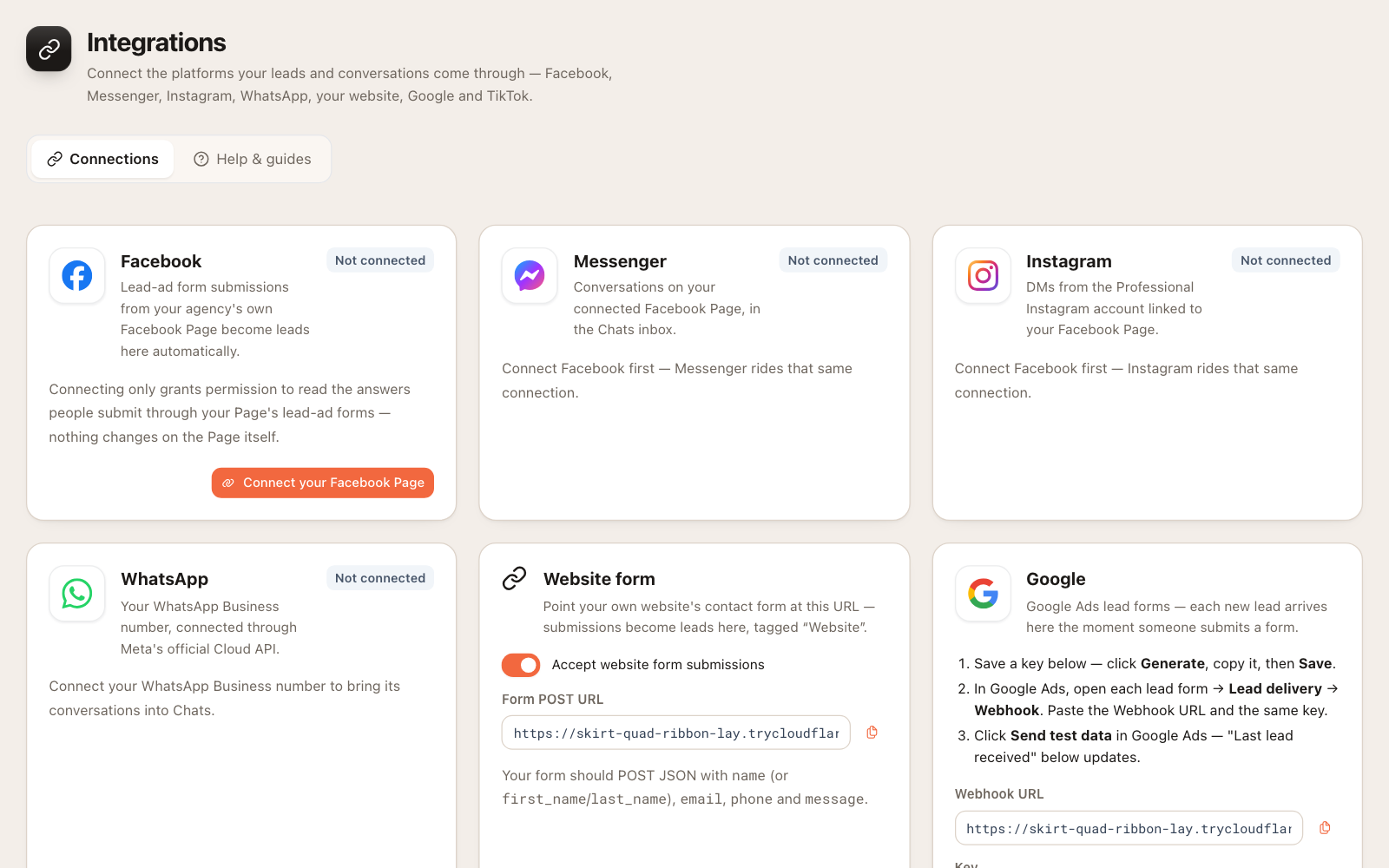
| Facebook, Google and WhatsApp integrations | You build them and pass Meta’s app review yourself | Already built and maintained |
| New features | You pay for each one | Included in the subscription |
| If the developer leaves | Knowledge often leaves too | The vendor’s whole team maintains it |
| Fit to your process | Exact, if specified well | Strong if built for your industry |
The hidden costs of custom software
The build quote is the visible part. These are the costs that usually arrive later:
- Hosting and operations: servers, domain, SSL certificates, monitoring and someone to fix things at 11 pm before an intake deadline.
- Backups that actually restore: taking backups is easy; regularly testing that you can restore them is what protects you.
- Platform rules that change: Meta’s lead ads and WhatsApp APIs change versions and policies, and integrations must pass app review. Someone has to keep up.
- Security work: student passports and financial documents need access control, encryption, audit trails and protection between users. This is ongoing, not a one-time task.
- Every small change: a new country, a new document type, a new report. Each one becomes a paid request and a wait.
- Key-person risk: if the one developer who understands the system moves on, you may be left with software nobody can safely change.
When custom software makes sense
- You are a large group with genuinely unusual processes no platform supports.
- You already employ an in-house technical team that will own the system for years.
- Software is part of what you sell, not just a tool you use to run the agency.
When SaaS is the better choice
For most agencies, from two counsellors to several branches, a SaaS platform built for study-abroad work wins. You start within days, the integrations with Facebook, Google and WhatsApp are maintained for you, security and backups are the vendor’s full-time job, and your money goes on counsellors and marketing rather than on software upkeep.
Eight security questions to ask any vendor
- How is our agency’s data kept separate from other agencies’ data?
- How often are backups taken, and when was a restore last tested?
- Can we control which roles see student documents, salaries and commission?
- Is there an activity log showing who viewed, changed or exported what?
- Can staff export student data freely, or does it need approval?
- How are passwords, sessions and access for former staff handled?
- Can we export all our data at any time, in a usable format?
- What happens to our data if we stop subscribing?
Moving from Excel in two weeks
- Days 1–2: clean your sheets. Remove duplicate phone numbers, agree on one spelling for each country and status.
- Days 3–4: import. Bring in active leads and current students first; archive the rest.
- Day 5: connect lead sources. Facebook lead ads, Google lead forms and your website form.
- Days 6–7: set up roles. Give each person the access their job needs, nothing more.
- Week 2: run live. All new leads go into the CRM only. Check overdue follow-ups every morning, and stop updating the old sheet.
Where Next Lead fits
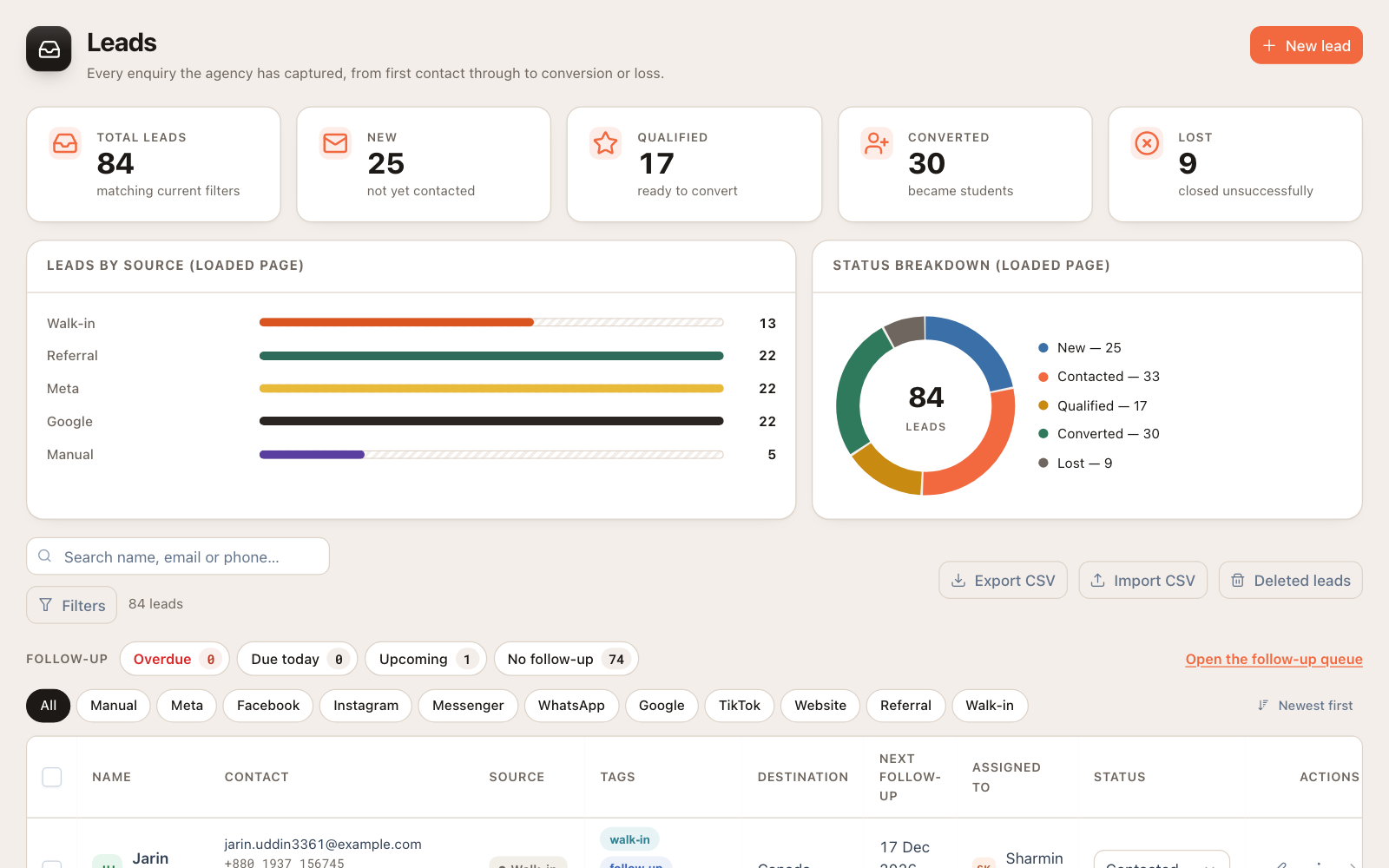
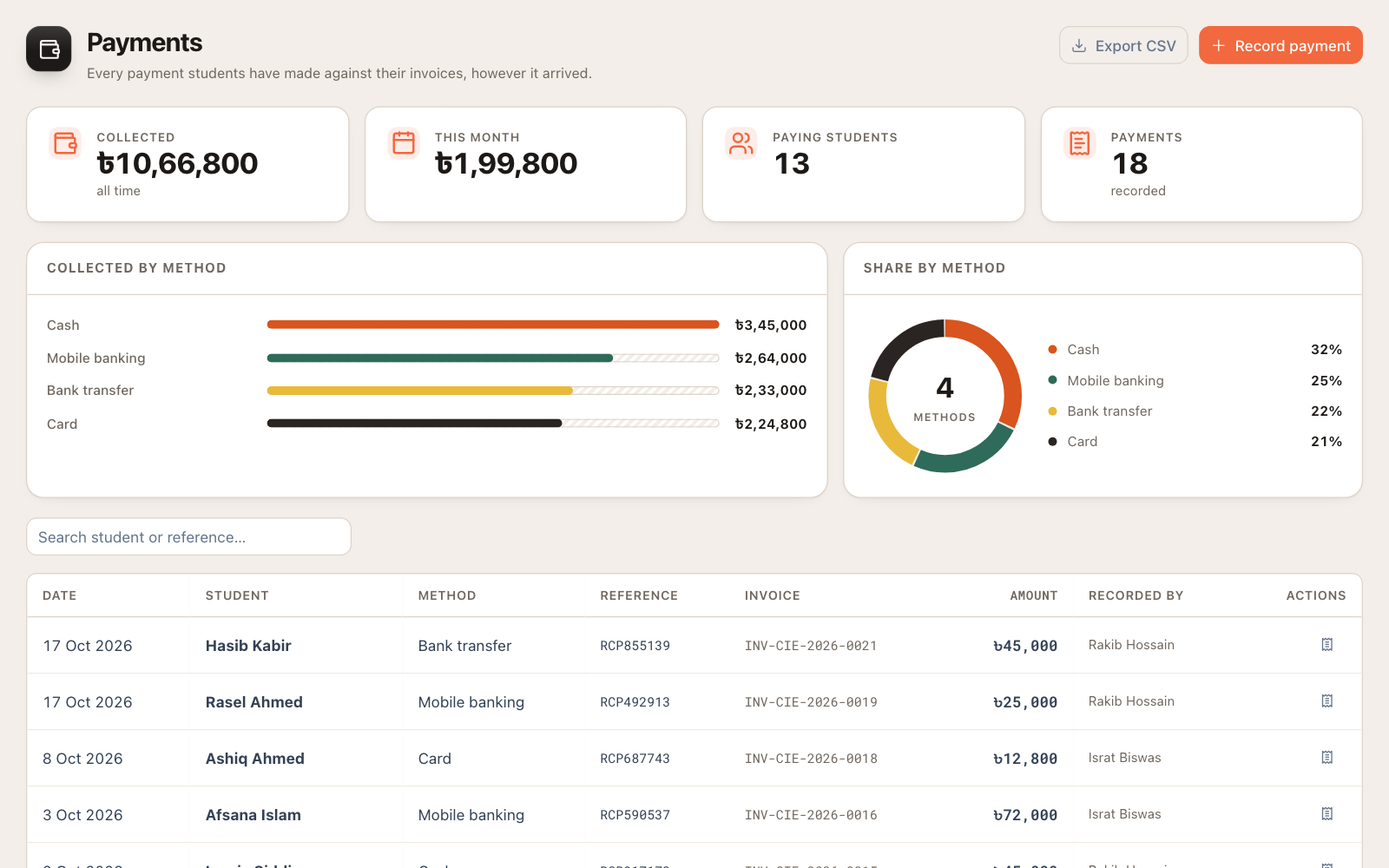
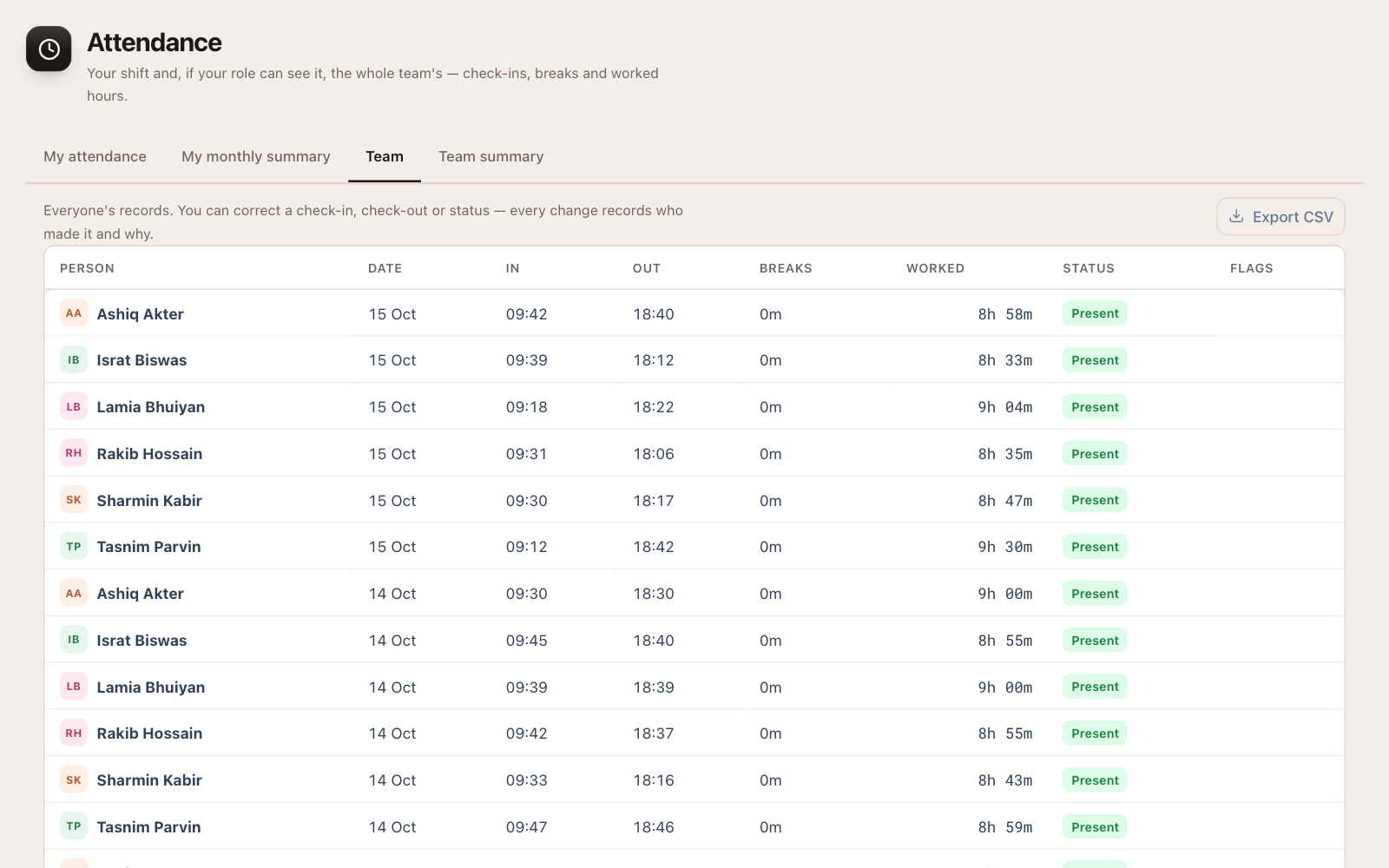
Next Lead is a SaaS CRM built for Bangladeshi study-abroad agencies, priced in taka. Each agency’s data is kept separate, access is controlled by role, important actions are recorded in an activity log, exports by non-admins need approval, and backups run every night. You get leads, follow-ups, applications, documents, payments, commission, attendance and leave in one system, without building or maintaining any of it. Book a demo or see pricing.
Related: the nine things a CRM must do for a study-abroad agency.
Frequently asked questions
Is SaaS safe for sensitive student documents?
It can be, if the vendor isolates each agency’s data, controls access by role, logs activity, backs up and tests restores. Ask the eight questions above and expect specific answers.
Will we own our data on a SaaS platform?
You should. Make sure the agreement says your data belongs to you and that you can export all of it at any time.
Can a SaaS CRM fit our agency’s process?
If it was built for study-abroad agencies, most of your process is already there: leads, applications by stage, documents, payments and commission. Check the few things unique to you during the demo.
How long does it take to switch?
With clean data, most agencies can be running live within about two weeks, following the plan above.