How study-abroad consultancies in Bangladesh can manage Facebook and WhatsApp leads without losing students
Your Facebook ads are not the problem; what happens in the first hour after a lead arrives is. A step-by-step follow-up system, with a cadence you can copy.
By Next Lead team, DigitOS · · 8 min read
Most study-abroad agencies in Bangladesh judge their Facebook ads by cost per lead. That number matters, but it is not the one that decides revenue. What decides revenue is what happens after the lead arrives: how fast someone replies, whether the follow-up actually happens, and whether anyone notices when a promising student goes quiet.
A student who fills in your lead form at 10 pm is usually comparing several consultancies the same evening. The agency that replies first, clearly and helpfully, tends to get the first real conversation. This article lays out a simple system any agency can run, with or without software, and shows where a CRM takes the manual work out of it.
The five places leads leak
- The Facebook Page inbox nobody owns. Messages pile up, two counsellors reply to the same student, or nobody does.
- Lead form downloads done weekly. By the time someone exports the CSV from Meta, the student has already spoken to another agency.
- Personal WhatsApp numbers. The conversation lives on a counsellor’s phone. If they are on leave or leave the job, the student’s history leaves with them.
- No next step on the lead. Without a next follow-up date, “I’ll call them later” quietly becomes never.
- No reason recorded when a lead is lost. You cannot fix what you never measure: price, wrong destination, no IELTS, or simply no follow-up.
A seven-step follow-up system
1. Put every enquiry into one list, automatically
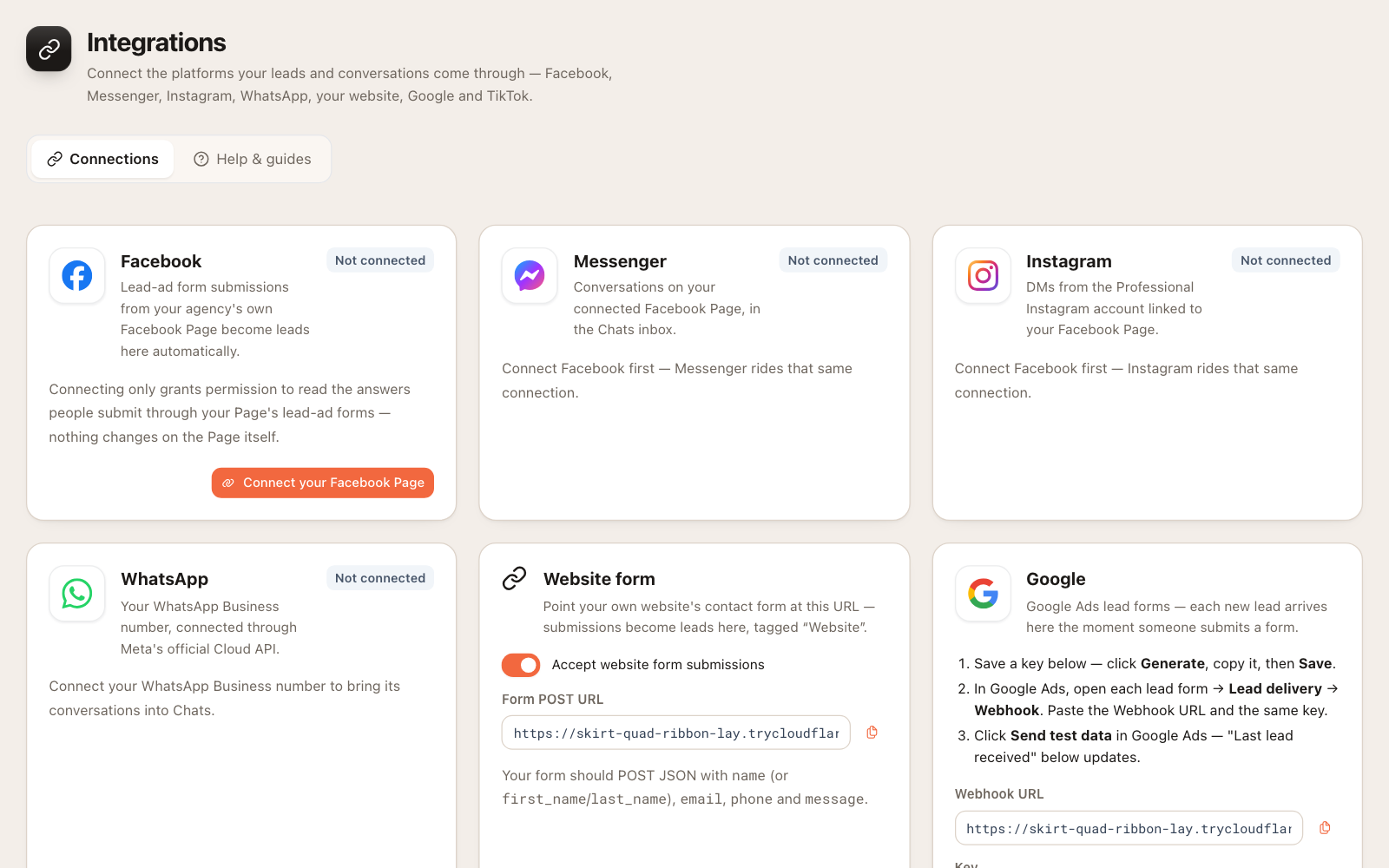
Facebook and Instagram lead ads, Google Ads lead forms, your website’s enquiry form and walk-ins should all land in one list with their source attached. Manual copying is where leads get lost and duplicated. Connect each source to your CRM once, and new leads appear within seconds of the student submitting.
2. Assign every lead the moment it arrives
A lead that belongs to “the team” belongs to nobody. Decide which counsellors take new leads and share them out automatically, in turn. Each counsellor then owns a clear list, and a manager can see at a glance who is overloaded.
3. Reply within the same working hour
Speed beats polish. A short, personal first message sent quickly does more than a perfect brochure sent tomorrow. Introduce yourself by name, mention what the student asked about, and ask one easy question. For example:
4. Follow a fixed cadence, not a feeling
Most students do not reply to the first message. That is normal, not a rejection. A fixed schedule makes sure every lead gets a fair number of attempts across different channels:
| When | Channel | Goal |
|---|---|---|
| Day 0, within the hour | WhatsApp or Messenger, then a call | Introduce yourself; book a call or office visit |
| Day 1 | Call | Understand destination, intake, budget and academics |
| Day 3 | Send one useful thing: a shortlist of universities or a document checklist | |
| Day 7 | Call | Invite to a free counselling session |
| Day 14 | Check in; share an upcoming deadline or scholarship | |
| Day 30 | Call or message | Last attempt; then mark as lost with a reason |
Set the next follow-up date every time you touch a lead. A good CRM reminds the counsellor when it is due, and flags overdue follow-ups in red so they cannot hide.
5. Qualify with the same questions every time
Agree as a team on the five or six things you must know before a lead becomes a student, and record them in the same fields every time: preferred country, intake, budget, last academic result (SSC, HSC or degree with GPA), English test (IELTS, PTE or Duolingo) and who is sponsoring. Consistent answers let you prioritise the leads most likely to apply.
6. Use statuses that mean something
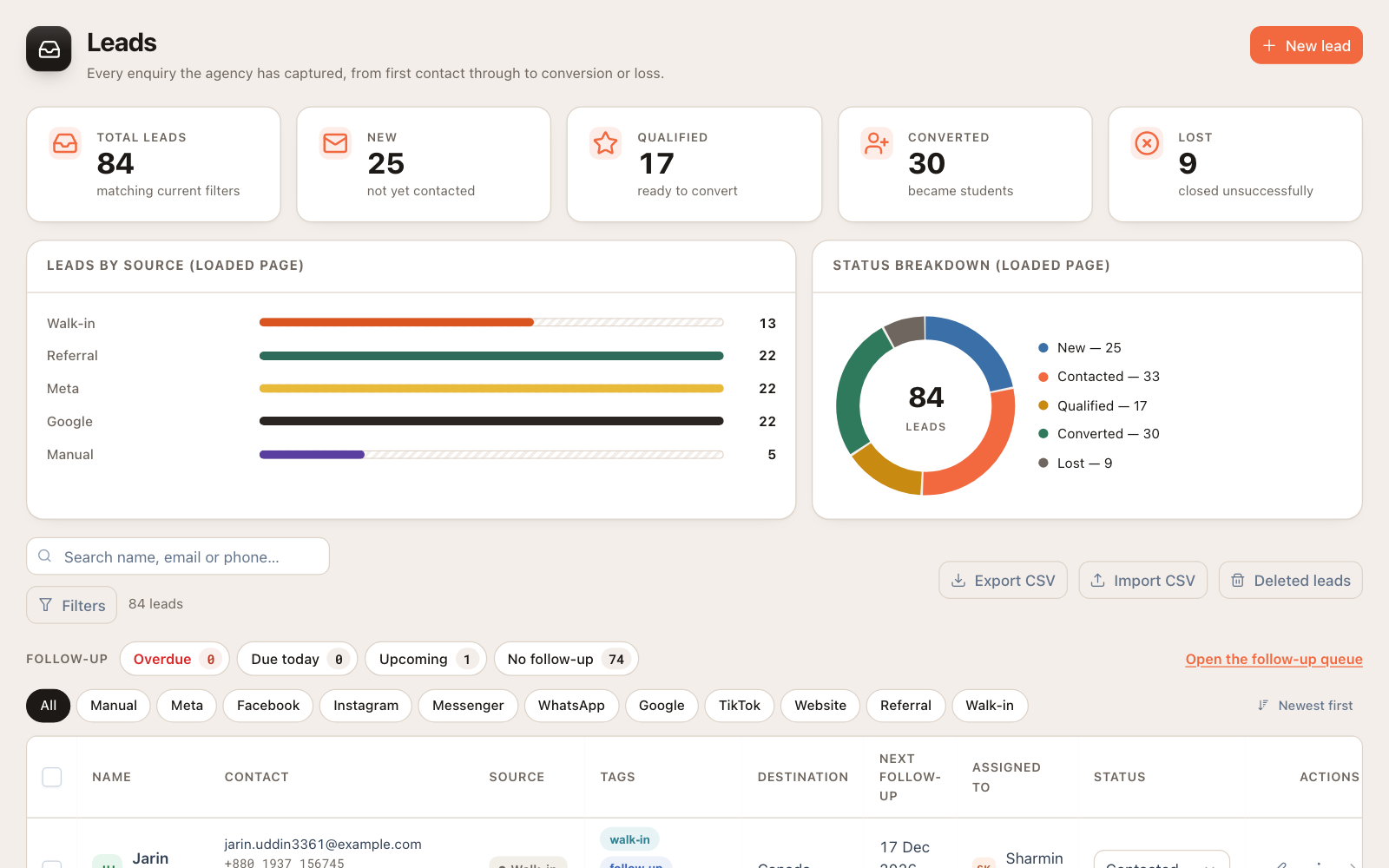
Keep the pipeline simple and agreed: New (not yet contacted), Contacted, Qualified (ready to convert), Converted (became a student) and Lost, always with a reason. When everyone uses the same words, your reports become trustworthy.
7. Review the numbers every week
Once a week, look at three things: how many leads each source produced, how many of each became students, and how many follow-ups went overdue per counsellor. This is where you find out whether a campaign that looks cheap per lead is actually expensive per student.
WhatsApp: do it properly
- Use a WhatsApp Business number that belongs to the agency, not a counsellor’s personal number, so conversations stay with the agency.
- Respect Meta’s 24-hour window. You can reply freely within 24 hours of the student’s last message. After that, the official WhatsApp Business Platform requires approved message templates.
- Never bulk-message people who did not contact you. It gets numbers restricted and damages trust.
- Keep every conversation next to the lead record, so whoever picks it up next sees the full history.
How Next Lead helps
Next Lead brings Facebook and Instagram lead ads, Google lead forms and website enquiries into one list automatically, shares new leads among the counsellors who take them, reminds counsellors of each follow-up, and flags overdue ones in red. Messenger, Instagram and WhatsApp conversations are being rolled out into the same inbox, next to each lead. Book a demo to see it with your own lead forms.
Choosing a system? Read our buyer’s guide to CRMs for study-abroad agencies in Bangladesh.
Frequently asked questions
How fast should we respond to a Facebook lead?
As fast as you reasonably can, ideally within the same working hour. Students often enquire with several agencies at once, and the first helpful reply usually starts the conversation.
How many times should we follow up before giving up?
Plan five or six attempts over about a month, across calls and messages. Record a reason when you stop, so you can learn which leads are worth chasing.
Should counsellors use their personal WhatsApp?
Avoid it. Use a WhatsApp Business number owned by the agency, ideally connected to your CRM, so conversations stay with the agency when staff are away or leave.
What is a good lead-to-student conversion rate?
It varies a lot by source, destination and season, so compare yourself against your own past months rather than an industry number. Track it per source, every week.